
The Question That Comes Before Development
April 17, 2026 2026-04-17 21:49The Question That Comes Before Development
The Question That Comes Before Development
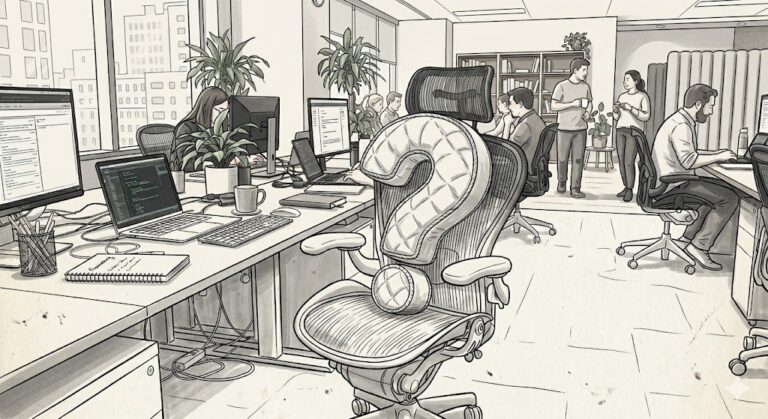
Every year, organizations invest heavily in leadership development, and every year, much of it underdelivers.
Not because the effort lacks intention. Because it often begins in the wrong place.
Before a development conversation, before coaching plans, before another investment in growing leaders, managers must answer one question honestly:
Is this the right person for this role, and can they fully own what it most critically requires now? That final word matters more than it used to. In many organizations, the role itself is changing faster than the development plan built around it.
Everything else follows from that.
The Cost of Skipping That Question
The cost is rarely immediate, which is why it persists.
Unclear standards produce inconsistent assessments. Inconsistent assessments produce uneven capability. Uneven capability creates hidden dependency.
When a VP keeps rewriting forecasts their director should own, the issue is often not effort. It is unclear ownership or outdated fit. Peers quietly compensate. High performers pick up the slack. The team learns that ownership is negotiable.
Managers absorb work that should sit elsewhere. Decisions escalate upward. Strong performers become overloaded. Critical roles end up filled by people being developed for seats where the gap is too great.
Succession risk grows quietly. Strategy slows gradually. Then both become visible at once.
Roles Are Moving Faster Than Talent Systems
AI, automation, and changing operating models are altering what work requires faster than many talent systems can respond.
Judgment, prioritization, adaptability, and cross-functional ownership are rising in value while routine execution declines. The fastest-growing talent risk is not capability gaps inside stable roles. It is stable talent systems inside changing roles.
That creates capable people with declining relevance, succession plans built on outdated assumptions, and performance systems measuring work that matters less each year.
The Assessment Comes Before the Development
If you cannot see clearly what the role requires, no amount of development will close the gap.
The work begins with a question many leaders skip: Are the three to five critical responsibilities for each seat on my team clearly defined, distinct from the person filling that seat?
Not a job description. Not generic competencies. Three to five responsibilities the role must fully own. Clear enough to assess. Specific enough to remove interpretation. Concrete enough to assign accountability.
And a second requirement: Are those responsibilities still current?
You cannot honestly assess someone against a standard that has not been set. And you cannot build future capability against a standard that is already obsolete.
Every Development Conversation Is Preceded by a Judgment
Most organizations talk about coaching as though it begins with encouragement. It doesn’t.
Every development conversation is preceded by a judgment: Can this person fully hold what the role requires now, and grow with where the role is going next?
When the standard is unclear, that judgment becomes subjective. When the standard is outdated, that judgment becomes misleading.
The Three Conversations That Follow
Once the role is clear, honest assessment leads to one of three conversations, and only three.
- Raise the Ceiling. The person is fully owning the role’s critical responsibilities. Your job shifts to identifying the next level of impact: broader scope, greater complexity, stronger decision ownership. This is not remediation. It is expansion.
- Find the Right Fit. This is the conversation managers avoid the longest. Not because the person is failing visibly, often the opposite. They are effortful, likable, reliable enough that nothing looks broken. What stands out instead is a pattern: the manager is quietly covering for areas this person cannot or will not fully own, or the role has evolved beyond where their strengths create value.
-
Close the Gap. This is where most organizations over-invest. The person seems close enough that coaching feels like the obvious answer. But coaching is only the right call when the fit is genuinely right and the gap is specific, addressable, and likely to close in a reasonable timeframe. The conversation starts from the standard: this role requires X, I observe Y, the gap is Z. When that bar isn’t met, what looks like development is actually deferred honesty about fit.
The honest question is not Is this person bad? It is Is this still the right match between this person and the full needs of the role?
If the answer is no, the solution is not automatically exit. The person may be better aligned elsewhere. But keeping someone in a role that has moved beyond fit, while avoiding the truth about it, is not kindness. It is avoidance, wearing the mask of care.
Where This Work Lives
This does not require another initiative. It requires one additional step inside the process you already run.
Most performance cycles begin with the person: How did they do? Where should they grow? The role is treated as a fixed backdrop.
That is the design flaw. Before any assessment of the person, the manager should answer two questions about the seat:
- What are the three to five responsibilities this role must fully own right now?
- Have any of those shifted since the last cycle?
This takes fifteen minutes. It changes everything that follows.
When a manager evaluates performance against those essential requirements of the role, fully owned, ratings become more honest. Development becomes more targeted. The three conversations, raise the ceiling, find the right fit, close the gap, emerge naturally from the assessment rather than being avoided until a crisis forces them.
Goal setting anchors to ownership, not activity. Calibration surfaces where managers are quietly carrying work the role should own. Talent reviews reflect actual readiness, not inherited ratings.
This is not a redesign of performance management. It is a single upstream question that makes every downstream conversation more honest and more useful.
What Needs to Change, and Who Starts
Function leaders must define the three to five most critical responsibilities of each seat in their area, and revisit them each cycle as work evolves. This is not HR’s job to do for them.
The CHRO’s role is to architect the system: facilitate definition of standards with the business, build manager capability to assess and coach against those standards, create calibration mechanisms that surface hidden coverage, and ensure role definitions evolve with changing work.
But it must be owned as a business performance issue. Otherwise it stalls before it starts.
Why This Matters at the Top
When role ownership is weak, leadership dependency rises. More decisions escalate. More complexity concentrates at the top. And the most expensive cost is often invisible: the leader absorbs work their team should own, which crowds out the higher-leverage work only they can do. Two roles end up underperforming — the one with the unclear fit, and the leader’s own. When role definitions lag changing work, the cost compounds. Leaders are not only solving too much. They are solving the wrong things. Organizations that scale cleanly do the opposite. They build leaders who fully own their roles, adapt as work changes, and grow faster than enterprise complexity.
Leadership development underdelivers when organizations develop people faster than they define what roles must truly own. And in the AI era, it underdelivers again when role definitions fail to keep pace with changing work.
The organizations that win the next decade will not out-train competitors. They will out-clarify role ownership, evolve standards faster than the market, and out-develop against what the future actually requires.
If This Is Relevant Right Now
This is exactly where we work with teams, when strong strategy is being undermined by missed results. If you’re also navigating execution drag, you may want to read: Don’t Just Fill Roles: Architect Teams that Deliver
If a focused conversation about our Outcome Drift Diagnostic would be useful, you can schedule below for a short call to learn more.