
The Drift to Decision Rule
January 16, 2026 2026-02-04 5:46The Drift to Decision Rule
The Drift-to-Decision Rule
Results are harder to earn right now, not because leaders forgot how to plan, but because the current environment punishes slow pivots and fuzzy ownership.
Markets shift mid-quarter. Dependencies multiply. Work moves across functions, time zones, and vendors. In that context, two execution killers show up everywhere: low ownership and slow hard calls when something isn’t working.
Many leaders respond by turning up the pressure: more check-ins, more escalation, more urgency. It feels like leadership. It’s often just noise.
What we actually see work is quieter and sharper: a team ownership system, a cadence that converts capacity into outcomes.
The Ownership System: Lock. Signal. Reset / Decide.
(Use different words if your culture prefers them. What matters is the mechanism.)
1. Lock the commitment
End every decision with three fields that eliminate ambiguity:
- Success metric: the measure that would force a decision if it doesn’t move
- Date: when we’ll know
- One owner: even if cross-functional execution, no “we” ownership
If it doesn’t have a metric, it isn’t real. If it doesn’t have an owner, it isn’t owned. That’s not harsh, it’s kind. It prevents drift masquerading as progress.
2. Signal early (before the miss)
Replace empty status updates with an early-warning system.
Operating rule: Status + Tripwire + Next Move.
- Status: Green / Yellow / Red (or “80% confident”)
- Tripwire: “If X happens, we escalate.”
- Next Move: “Here’s what I’m doing to shift this, or here’s the ask I have.”
Tripwires are thresholds, not feelings. Examples:
- Timeline: If we slip more than 7 days, we escalate for a scope or resourcing decision.
- Budget: If spend exceeds plan by 10%, we escalate for a tradeoff.
- Quality/Risk: If review exceeds 5 business days, we escalate.
This is how you buy time. Risk shows up while it’s still cheap.
And we’ve all seen the human truth underneath all of it: if early flags get punished, signals go dark. People stop telling you the truth, not because they’re dishonest, but because the system trained them to protect themselves. So the rule is simple: reward early truth with help, not heat.
3. Reset / Decide (when reality changes)
Pressure doesn’t fix drift. Fast resets, and clean decisions, do.
Trigger: Red once, Yellow two updates in a row, or any milestone slip. From there, there are two moves:
Reset when the outcome is still achievable with a change:
- Name the issue (diagnose the constraint – skill issue, communication breakdown, ownership question, system breakdown..)
- Choose the solve (what we’ll do differently)
- Re-close the commitment (metric/date/owner)
- Set new tripwires
Decide when the reset doesn’t restore confidence in weeks, not months, by the next decision forum (team meeting, functional LT, etc).
Auto-escalation: if it stays Red after a reset or remains Yellow for three cycles, it moves to a Decision Point. The owner escalates with options and the accountable leader makes the call. There are potential three outcomes:
- Replan (change approach)
- Resource (add capacity)
- Rescope (shrink to proof)
- Reassign (adjust owner or decision rights)
No more ‘keep trying.’ The system forces a real choice: Replan, Resource, Rescope, or Reassign.
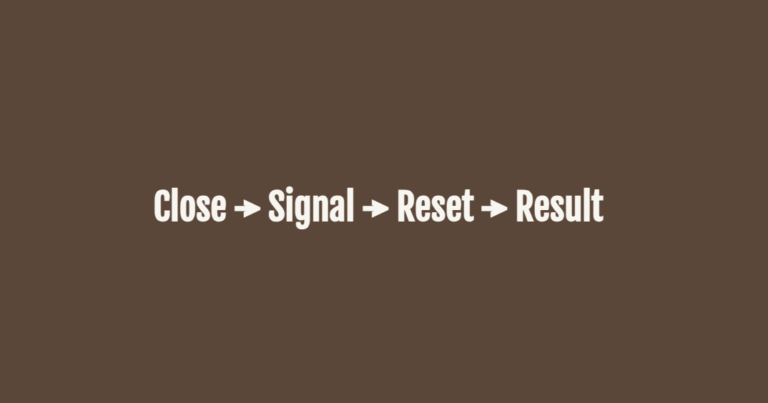
What this looks like (in 3 lines)
Close: Reduce Q2 customer churn from 4.2% → 3.5% by June 30. Metric: monthly logo churn %. Owner: Marco.
Signal: Yellow. Tripwire: if renewal pipeline coverage drops below 1.2x or top-10 at-risk accounts exceed 3, escalate. Next move: deliver a 30-day save plan + resource ask by Friday.
Reset → Decide: Confidence stays Yellow two cycles; we run a Rapid Reset. If it remains Yellow/Red, the next forum decides: resource, rescope, or change D-rights.
The scoreboard (simple, hard to game)
Two numbers tell you if the system is working, and what problem you actually have:
- Miss rate (reliability): % of missed targets
- Late surprise rate (truth-telling): % of misses not flagged by a tripwire
When these decrease, the payoff is immediate: fewer zombie initiatives, less rework, faster tradeoffs, and resources moving to what’s working before the quarter is over.
Accountability isn’t a person. It’s a partnership with a scoreboard.
And in this environment, it’s how you protect speed, without burning people out.
If This Is Relevant Right Now
This is exactly where we work with teams, when strong strategy is being undermined with missed results. If you’re also navigating execution drag, you may want to read: Don’t Just Fill Roles: Architect Teams that Deliver
If a focused conversation about Outcome Drift Diagnostic would be useful, you can schedule below for a short call to learn more.