
Why Feedback Stops Scaling Leadership and Begins Constraining Enterprise Scale
February 23, 2026 2026-02-24 17:58Why Feedback Stops Scaling Leadership and Begins Constraining Enterprise Scale
Why Feedback Stops Scaling Leadership and Begins to Constrain Enterprise Scale
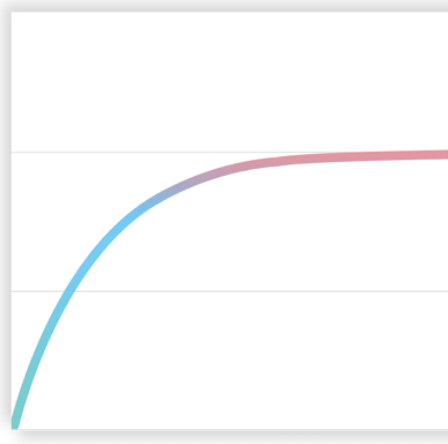
Many leaders continue receiving feedback for years without their leadership capability evolving at the rate enterprise complexity requires. When this happens, organizational scale slows and leadership effectiveness becomes the limiting factor on organizational growth, regardless of how strong the strategy itself may be.
The determining factor is what can be called Feedback Integration Capacity.
Feedback Integration Capacity is the organizational leadership system’s ability to structurally convert feedback into continuous leadership capability evolution. It determines whether leadership capability expands alongside organizational complexity or stabilizes while organizational demands continue increasing.
This distinction becomes decisive at the leadership inflection point where a leader transitions from being responsible for their own leadership effectiveness to becoming responsible for the leadership capability that exists across layers they no longer directly control.
When Feedback Integration Capacity is insufficient, the leader experiences the consequences directly.
– Decisions that should be resolved independently continue escalating upward.
– Strategic alignment requires increasing leader involvement.
– The leader ends up being the stabilizing force compensating for leadership capability that has stopped evolving proportionally within their function.
Over time, the leader’s cognitive bandwidth becomes the scaling constraint, and execution slows as the enterprise becomes dependent on individual leadership strength rather than system capability.
This creates succession fragility. Leadership successors appear capable within the current enterprise state but lack the adaptive leadership capacity required to evolve the enterprise beyond its current level of complexity.
This is the Leadership Capability Ceiling in operation.
Enterprises with insufficient Feedback Integration Capacity continue operating successfully but lose adaptive velocity.
– Strategic pivots take longer.
– Leadership alignment requires greater effort.
– Leader involvement remains necessary to maintain execution coherence.
In contrast, enterprises with high Feedback Integration Capacity experience a fundamentally different trajectory.
Leadership capability evolves continuously across layers. Executives expand their leadership capability in proportion to enterprise complexity. Leadership capability propagates rather than concentrates. Decision clarity increases across levels. Individual decision load decreases. The leader becomes amplified by the leadership system rather than required to compensate for its limitations.
This difference determines scalability.
Leaders with high Feedback Integration Capacity expand leadership capability across layers, allowing the organization to scale without increasing executive dependency.
Leaders without this capability remain capable leaders, but their leadership capability stabilizes relative to enterprise complexity. Their organizations increasingly relies on their intervention to maintain alignment and execution effectiveness.
When leadership capability evolves continuously, leadership amplifies enterprise scale. Leaders become architects of leadership capability infrastructure.
When it does not, leadership quietly becomes the constraint.
How to Recognize When Feedback Integration Capacity Is Insufficient
This rarely appears as obvious dysfunction. Organizations continue performing. Results may remain strong. But structural signals begin to emerge:
Decisions that should resolve independently escalate upward
Leader decision load increases rather than decreases over time
Performance depends heavily on specific individuals
These are not talent problems. They are propagation problems. The organization is generating leadership insight, but not converting it into distributed leadership capability.
What Builds Feedback Integration Capacity
Feedback Integration Capacity is not created by increasing feedback volume. The constraint is whether the leadership system converts feedback into leadership capability that propagates across layers.
In organizations with strong Feedback Integration Capacity, feedback becomes part of leadership infrastructure that propagates capability across leadership levels.
This occurs through three structural layers:
Visibility: Leaders receive clear, behaviorally specific feedback on how their leadership is experienced.
Translation: Feedback is converted into explicit leadership expectations and reinforced through operating cadence and decision environments.
Propagation: Leadership capability spreads across leadership layers, reducing executive dependency and increasing autonomous leadership effectiveness.
Most organizations achieve visibility. Some achieve translation. Few achieve propagation.
When propagation does not occur, leadership capability stabilizes while enterprise complexity continues increasing. Executives remain individually effective, but the leadership system stops evolving. Decision escalation increases, executive dependency grows, and scalability becomes constrained.
Feedback Integration Capacity determines whether leadership capability expands alongside enterprise complexity—or whether leadership itself becomes the constraint on future growth.
If This Is Relevant Right Now
This is exactly where we work with teams, when strong strategy is being undermined with missed results. If you’re also navigating execution drag, you may want to read: Don’t Just Fill Roles: Architect Teams that Deliver
If a focused conversation about Outcome Drift Diagnostic would be useful, you can schedule below for a short call to learn more.